
Fed Rate Cut: Fueling Demand or Signalling Recession Fear?
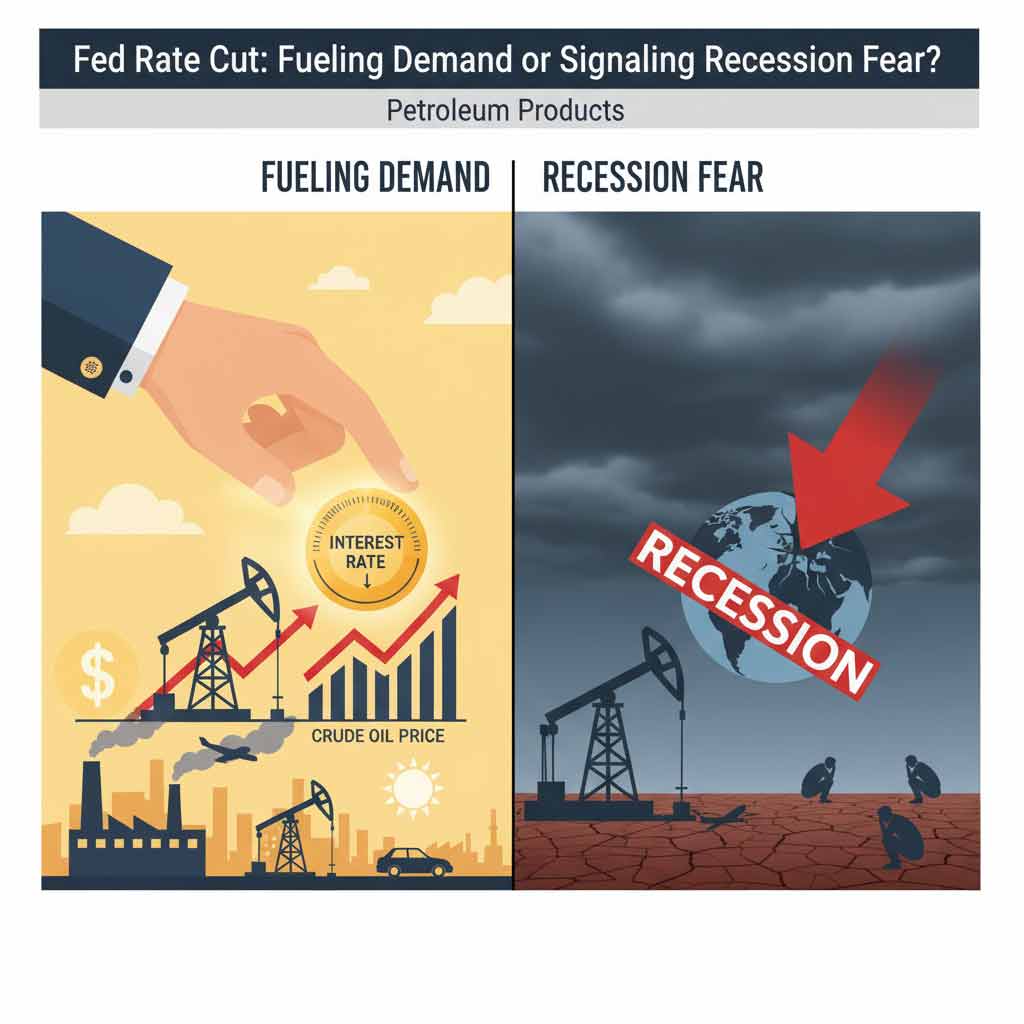
The recent announcement by the Federal Reserve to cut its benchmark interest rate has once again focused global market attention on the policy’s impact on commodity prices, particularly crude oil and petroleum products. A rate cut typically affects oil prices in two main ways:
- Stimulating Economic Growth and Demand: Lower interest rates mean cheaper borrowing costs for businesses and consumers. This can spur economic activity, boost industrial production, and subsequently increase energy demand and lift oil prices.
- Weakening the Dollar: Rate cuts often devalue the US Dollar against other currencies. Since crude oil is priced in USD, a weaker dollar makes oil cheaper for holders of other currencies, usually leading to an increase in oil prices.
However, the rate cut can also be viewed as a worrying signal; that the Fed sees economic conditions (such as a soft labor market or falling inflation) as fragile enough to warrant immediate intervention. This fear of an economic recession can overshadow optimism about energy demand, ultimately preventing a sustained rise in oil prices.
Other Key Factors Influencing Oil Prices
Beyond monetary policy, oil prices are affected by a confluence of other fundamental factors:
- Global Supply and Demand: The most crucial element is the supply output from OPEC+ and non-OPEC producers (like the US and Canada) versus the demand from the largest consumers (China, the US, and India). Increased supply or reduced demand typically pressures prices downwards.
- Geopolitical Factors: Tensions in major oil-producing regions, such as the Middle East, or sanctions against countries like Russia or Venezuela, can disrupt supply and cause sharp price increases.
- Inventory Levels: The volume of crude oil and product inventories in storage globally and in the US serves as a measure of surplus or shortage, influencing price expectations.
- Refined Products Market: Demand and pricing in the refining markets for gasoline and heating fuels also have a direct impact on crude oil prices.
Price Outlook for the Coming Months
Analysts are divided on the future trajectory of oil prices in the coming months. Some predict that the market’s focus on a potential supply surplus (due to OPEC+ output increases or high US production) and concerns over weakening global demand from slower economies in China and Europe will keep prices on a downward trend.
Conversely, others believe the rate cut will eventually stimulate global economic growth and boost demand. They also argue that geopolitical risks and the probability of OPEC+ reacting to lower prices by cutting production again will prevent a severe price collapse and may even lead to moderate growth in the future.
Overall, despite the upward levers from the rate cut, the battle between ample supply and soft demand is expected to maintain a fragile balance in the market, with continued price volatility.


Leave a Reply
Want to join the discussion?Feel free to contribute!