
Oil Price Volatility: How the US-China Trade War Affects the Global Energy Market
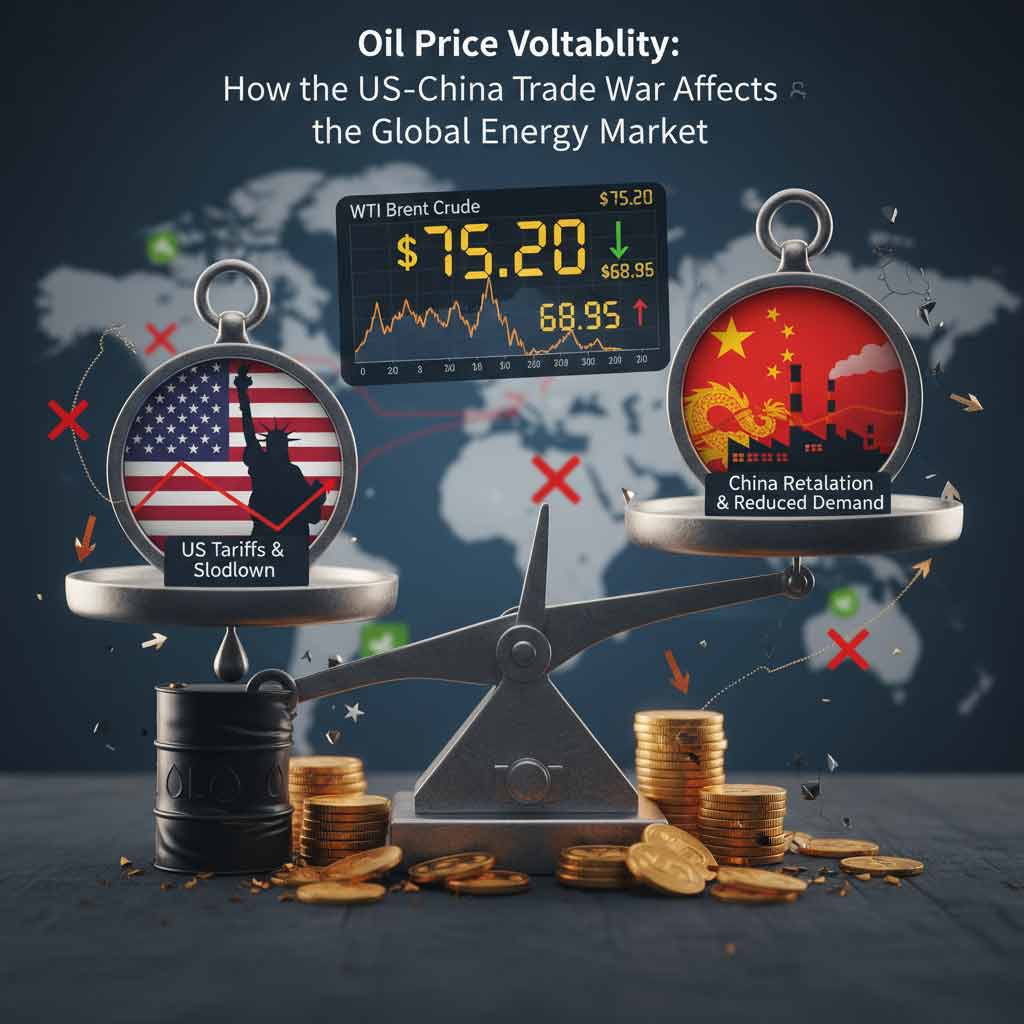
Trade tensions and the threat of imposing heavy tariffs between the United States and China—the two largest economies and biggest global oil consumers—have historically acted as a bearish factor in the oil market. The logic is clear:
- Slower Global Economic Growth: A trade war, due to increased import costs and reduced investor confidence, leads to forecasts of slowing economic growth worldwide.
- Reduced Energy Demand: With slower growth, the need for transportation, industrial production, and thus the consumption of crude oil and petroleum products like gasoline and diesel, decreases.
During peak tension periods, prices for Brent and WTI crude oil often experienced significant declines driven by fears of an impending supply glut coupled with falling future demand.
The Deal: Hope for an Energy Market Revival
The announcement of a trade agreement, coupled with tariff reductions and the resolution of issues such as China’s restriction on rare earth elements exports, sparked a wave of optimism in financial markets.
- Short-Term Impact: While stock markets, including the Shanghai index and Wall Street, reacted positively, the oil market response was more cautious. Prices saw a marginal initial gain but lacked a significant jump due to a lack of detailed implementation plans and skepticism about the truce’s longevity.
- Long-Term Impact: If the trade deal holds and economic growth in both China (the world’s largest oil importer) and the US accelerates, global energy demand will increase. This sustained demand could ultimately support rising oil prices.
Key Takeaway: Experts emphasize that the future stability of crude oil and petroleum product prices largely depends on the consistent implementation of this agreement and the reduction of uncertainty across global supply chains.


Leave a Reply
Want to join the discussion?Feel free to contribute!