
Naphtha vs. Acetone – A Deep Dive into Two Industrial Powerhouses
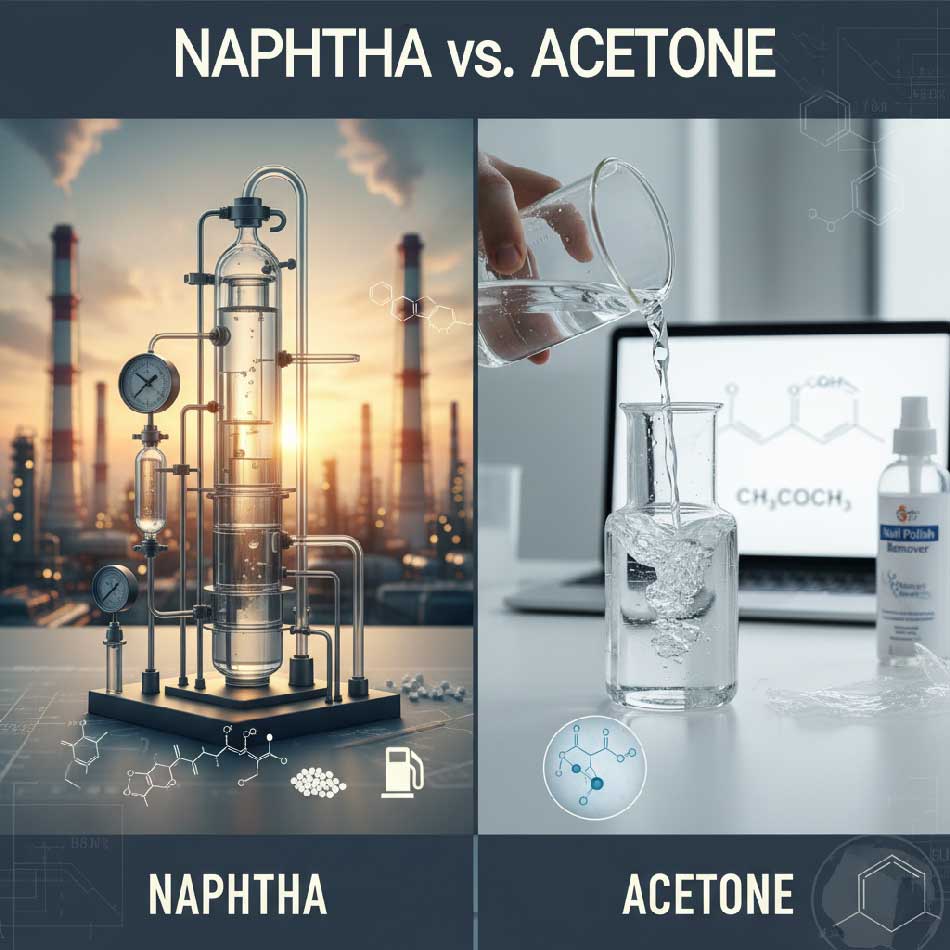
In the vast world of industrial chemicals and petroleum derivatives, understanding the specific properties and applications of each compound is crucial. Today, we delve into a comparative analysis of two significant players: Naphtha and Acetone. While both are widely used in various industrial processes, their origins, chemical structures, and primary functions are fundamentally different. This article aims to clarify these distinctions, offering insights for professionals in the chemical, petroleum, and manufacturing sectors.
Naphtha: The Versatile Petroleum Distillate
Naphtha is not a single, pure chemical compound but rather a broad-range petroleum distillate. It’s a complex mixture of hydrocarbons with varying boiling points, obtained during the fractional distillation of crude oil. Depending on its boiling range and chemical composition, naphtha can be categorized into different types (e.g., light naphtha, heavy naphtha), each with distinct applications.
Key Characteristics of Naphtha:
- Origin: Derived directly from crude oil refining processes.
- Composition: Primarily a mixture of alkanes (paraffins), cycloalkanes (naphthenes), and aromatic hydrocarbons.
- Volatility: Highly volatile and flammable.
- Appearance: Typically a clear, colorless liquid, though some grades may have a slight yellowish tint.
- Odor: Has a distinct, gasoline-like odor.
Primary Applications of Naphtha:
- Petrochemical Feedstock: This is perhaps its most significant role. Light naphtha is a crucial feedstock for steam crackers to produce olefins (ethylene, propylene, butylene) and aromatics (benzene, toluene, xylenes), which are the building blocks for plastics, synthetic rubbers, and numerous organic chemicals.
- Gasoline Blending: Certain naphtha cuts are blended into gasoline to improve its octane rating and overall performance.
- Solvent: Used as a solvent in paints, varnishes, dry cleaning, and as a cleaning agent in various industries. “White spirit” or “mineral spirits” are common naphtha-based solvents.
- Fuel: Historically used as lamp oil and in some camping stoves.

Acetone: The Simple Ketone
Acetone (CH₃COCH₃), also known as propanone, is the simplest and smallest ketone. Unlike naphtha, it is a single, pure organic chemical compound belonging to the ketone family. Acetone can be produced through various chemical processes, most commonly via the cumene process, or as a byproduct of phenol production.
Key Characteristics of Acetone:
- Origin: Synthesized chemically, primarily from propylene via cumene, or fermentation.
- Composition: A pure chemical compound with the formula C₃H₆O.
- Volatility: Highly volatile and flammable.
- Appearance: Clear, colorless liquid.
- Odor: Distinctive, sweet, pungent odor.
- Miscibility: Fully miscible with water, which is a key differentiator from most naphtha varieties.
Primary Applications of Acetone:
- Excellent Solvent: Acetone is renowned for its powerful solvent properties. It dissolves a wide range of organic compounds, including plastics, resins, glues, and paints. It’s the primary component in many nail polish removers.
- Chemical Intermediate: Used in the production of various chemicals, including bisphenol A (a precursor to polycarbonates and epoxy resins), methyl methacrylate (for Plexiglas/PMMA), and other solvents.
- Cleaning Agent: Employed as a degreaser and cleaning agent in laboratories and industrial settings.
- Carrier Solvent: Used in the pharmaceutical industry and as a component in certain adhesives.
Naphtha vs. Acetone: Key Differentiators
Safety Considerations
Both naphtha and acetone are highly flammable liquids and require careful handling. They are also volatile and can produce vapors that may cause dizziness or respiratory irritation. Proper ventilation, personal protective equipment, and adherence to safety protocols are paramount when working with either substance. Acetone has a relatively lower flash point than many naphtha grades, making it particularly prone to ignition.
Conclusion
While both naphtha and acetone are indispensable industrial solvents and raw materials, their fundamental differences in origin, chemical structure, and primary applications are clear. Naphtha, as a complex petroleum fraction, serves as a vital feedstock for the petrochemical industry and a versatile solvent. Acetone, a simple but powerful ketone, shines as an excellent solvent for a wide array of organic compounds and a key chemical intermediate. Understanding these distinctions is crucial for optimal selection and safe utilization in diverse industrial landscapes.
Frequently Asked Questions (FAQ)
What is the main difference between Naphtha and Acetone?
The main difference lies in their chemical nature and origin. Naphtha is a mixture of hydrocarbons (a petroleum fraction) used primarily as a petrochemical feedstock. Acetone is a single, pure chemical compound (a simple ketone) used primarily as a potent and universal solvent.
Can Acetone be used as a substitute for Naphtha?
Generally, no. Naphtha’s primary use is as a bulk feedstock for steam cracking to produce ethylene and propylene. Acetone cannot fulfill this role due to its distinct chemical structure and oxygen content. While both are solvents, acetone’s solvent power and miscibility with water are very different from naphtha’s.
Where does Naphtha come from?
Naphtha is a product of the refining of crude oil. It is separated from crude oil during the fractional distillation process, falling into the medium-light boiling range.
Is Acetone environmentally friendly?
Acetone is often considered a relatively less hazardous organic solvent compared to many others. It is highly volatile, meaning it dissipates quickly, and is biodegradable in the environment. However, due to its flammability, it still requires careful handling and disposal.
What is the primary use of light naphtha?
The primary and most critical use of light naphtha is as feedstock for petrochemical steam crackers to produce essential monomers like ethylene, propylene, and butadiene.
Global Petroleum Trade Solutions | Universal Trades
As a reputable international petroleum trading enterprise, Universal Trades specializes in the reliable procurement, export, and supply chain management of high-grade petroleum commodities, refined fuels, and industrial feedstocks designed to meet rigorous global standards.








What physical property distinguishes Acetone from Naphtha-based solvents when mixing with water?
The distinguishing feature is Acetone’s complete miscibility with water (Hydrophilic). Acetone (a ketone) can fully dissolve in water. In contrast, Naphtha (a hydrocarbon mixture) is hydrophobic and typically does not mix with water, or is only slightly miscible, forming a separate layer.