
Bitumen vs. Tar: Understanding the Key Differences

Bitumen and Tar are two dark, viscous, and adhesive materials widely used in various industries, particularly in road construction and waterproofing. Despite their superficial similarities in appearance and application, these two substances differ significantly in their origin, chemical composition, physical and chemical properties, and consequently, their applications and safety profiles. Understanding these distinctions is crucial for making informed choices in different projects, ensuring both safety and optimal performance.
Bitumen: A Product from Earth’s Depths
Bitumen, also commonly known as asphalt binder (asphalt itself is a mixture of bitumen and aggregates), is a sticky, black or dark brown substance derived from crude oil. While naturally occurring bitumen deposits exist in some areas (like bitumen lakes), the vast majority of bitumen used in industries is a final product of crude oil refining processes.
Key Characteristics of Bitumen:
- Origin: Primarily a refined product of crude oil (or, rarely, naturally occurring).
- Chemical Composition: Primarily heavy hydrocarbons (asphaltenes, resins, and oils). Its composition is complex and can vary.
- Properties: High viscosity, excellent adhesion, water resistance, and flexibility across various temperatures. It softens at high temperatures and hardens at low temperatures.
- Safety: Compared to tar, it has lower toxicity. It also emits fewer volatile organic compounds (VOCs).
- Applications: Predominantly used in road construction (asphalt production), damp-proofing and waterproofing (roofing, foundations), and in the manufacture of insulation sheets and protective coatings.
To learn more about the differences between natural bitumen and refinery bitumen, read the article “Comparison of Natural and Refinery Bitumen.”
Tar: A Byproduct of Organic Material Pyrolysis
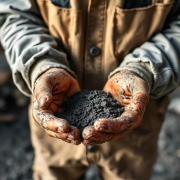
Tar is a viscous, black substance obtained from the destructive distillation or pyrolysis of organic materials such as coal, wood, peat, and oil shale. The most well-known type of tar is Coal Tar, which is a byproduct of coke production from coal.
Key Characteristics of Tar:
- Origin: A product of the pyrolysis of organic materials (primarily coal, wood).
- Chemical Composition: Contains a wide range of organic compounds, including polycyclic aromatic hydrocarbons (PAHs), many of which are carcinogenic. It also includes phenols, creosote, and other chemical compounds.
- Properties: Possesses relatively good adhesion but has inferior mechanical properties and stability compared to bitumen, especially against environmental factors like UV radiation. It tends to be more brittle at low temperatures.
- Safety: Contains carcinogenic compounds (PAHs) and has higher VOC emissions. Skin contact and inhalation of its fumes are hazardous.
- Applications: Historically used in road construction and waterproofing. Today, its use is restricted in many countries due to health and environmental risks. Specific applications include the production of medicinal tar, wood preservation (creosote), and the manufacture of certain chemicals.

Bitumen vs. Tar: A Comparative Table
Frequently Asked Questions (FAQ)
In this section, we address common questions regarding the differences between bitumen and tar.
1. Which is better, bitumen or tar?
Generally, bitumen is considered “better” than tar, especially for widespread applications like road construction and waterproofing. The reasons for bitumen’s superiority include:
- Safety: Bitumen has significantly lower toxicity than tar and is free from dangerous carcinogenic compounds (like PAHs found in coal tar).
- Performance: Bitumen offers superior mechanical properties and stability against environmental factors such as UV radiation and temperature fluctuations. It provides greater flexibility and performs better in the long run.
- Recyclability: Asphalt containing bitumen is easily recyclable and reusable, which is a significant environmental advantage.
2. Is bitumen tar-based?
No, bitumen is not tar-based. These two materials are fundamentally different in their origin and chemical composition. Bitumen is derived from crude oil, whereas tar is produced from the pyrolysis of organic materials like coal or wood. This is a common misconception often arising from the superficial resemblance of the two substances.
3. Why is bitumen better than coal tar?
Bitumen is superior to coal tar for several reasons:
- Health and Safety: Coal tar contains high levels of polycyclic aromatic hydrocarbons (PAHs), many of which are carcinogenic. Contact with it and inhalation of its fumes are highly detrimental to human health. Bitumen is free of these dangerous compounds or contains them in negligible amounts.
- Stability and Durability: Bitumen offers better resistance to weathering, especially UV radiation, and is less prone to cracking and brittleness.
- Flexibility: Bitumen maintains its flexibility across a wide range of temperatures, while coal tar becomes more brittle at lower temperatures.
- Environmental Impact: Bitumen has lower VOC emissions and, due to its recyclability, a smaller environmental footprint.
4. Is tar just carbon?
No, tar is not just carbon. While carbon is a primary component of tar and contributes to its black color, tar is a complex mixture of thousands of different organic compounds. These compounds include:
- Polycyclic Aromatic Hydrocarbons (PAHs)
- Phenols
- Amines
- Light and heavy oils
- Compounds containing oxygen, nitrogen, and sulfur
The quantity and type of these compounds vary depending on the source of the organic material (coal, wood, etc.) and the pyrolysis method.
5. What is better than bitumen?
“Better” is a relative term that depends on the specific application and project requirements. For bitumen’s primary applications, such as road construction and waterproofing, bitumen (especially its modified versions) is often the best choice in terms of performance, cost, and ease of application.
However, in certain specific cases, other materials might be “better”:
- Concrete: For pavements with very heavy traffic or requiring extremely long durability (like airport runways), concrete might be preferred due to its higher hardness and compressive strength.
- Geomembranes: For highly precise sealing in specialized projects (e.g., landfills or water reservoirs), polymeric geomembranes might be preferred due to their higher chemical resistance and flexibility.
- Epoxy Resins: For industrial floor coatings requiring very high chemical and abrasion resistance, epoxy resins are superior options.
- Polymer Mastics: For specific sealing and caulking applications, polymer-based mastics may offer better flexibility and adhesion than pure bitumen.
In summary, no single material is universally “best.” The selection of the optimal material depends on a thorough evaluation of project needs, budget, and environmental and safety considerations. However, within its main application areas, bitumen remains a highly effective and economical material.
Global Petroleum Trade Solutions | Universal Trades
As a reputable international petroleum trading enterprise, Universal Trades specializes in the reliable procurement, export, and supply chain management of high-grade petroleum commodities, refined fuels, and industrial feedstocks designed to meet rigorous global standards.






Is tar obtained only from coal? What are the other sources of tar production?
No, tar is not obtained only from coal. Tar is also produced from the destructive distillation or pyrolysis of organic materials such as wood, peat, and oil shale.