
Introduction to Vacuum Bottom Types and Factors Affecting Their Quality
Petroleum Products, Vacuum Bottom
Vacuum Bottom (VB), also known as Vacuum Tower Bottoms (VTB) or Heavy Vacuum Residue (HVR), represents the heaviest and most challenging components of crude oil. This material, the final product of vacuum distillation, forms the foundation for bitumen production. Composed of hydrocarbons with chains longer than 35 carbon atoms, vacuum bottom appears as a solid or semi-solid at ambient temperature. Although it is obtained in the final stages of oil refining, it plays a fundamental role in various industries.
The creation of vacuum bottom occurs in two distillation steps: atmospheric distillation and vacuum distillation. In the first step, crude oil, after being heated, passes through an atmospheric distillation tower. At this stage, the temperature of the crude oil is increased to approximately 370 degrees Celsius, and its lighter components are separated from the main body. The heaviest component resulting from this process, known as “vacuum bottom,” undergoes further processing in the vacuum distillation unit. In this section, by reducing the pressure and precisely controlling the temperature, the breakdown of molecule structures is prevented. This measure allows for the separation of heavier components of crude oil at lower temperatures, preventing thermal cracking of the molecules. Vacuum distillation, like the beating heart of the oil refining process, enables the production of petroleum products from heavy oils remaining after atmospheric distillation. The presence of vacuum distillation units in about 80 percent of active refineries in the United States attests to this importance.
In the past, vacuum bottom was considered a waste and unusable material in the oil industry and had no place in industrial applications. However, with the continuous advancement of knowledge and technology, diverse uses have been discovered for it.
Vacuum bottom, as the primary raw material in the production of bitumen, plays a crucial role in the road and construction and insulation industries. It is also used to produce industrial base oils and lubricants. Vacuum bottom, like a flexible paste, can be used as feedstock for upgrading units such as delayed coking and hydrocracking units to be converted into more valuable products such as naphtha, gasoil, and petroleum coke. In some industries, vacuum bottom is also used as a fuel alternative to heavy fuel oil. Approximately 70 percent of the raw material for fuel oil is derived from vacuum bottom. The variety of applications of vacuum bottom demonstrates the high value of this material as a byproduct of oil refining and plays an important role in the trade of petroleum products. This material, once considered a challenge, has now become a vital component in the global energy and production system.
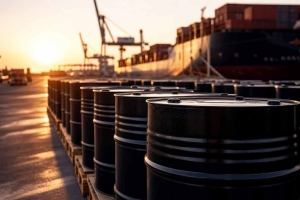
Appearance of the vacuum cleaner and its technical features
Vacuum bottom is not uniform, unlike gasoline or diesel. However, depending on the type of crude oil input, the refining process used, and the intended final application, vacuum bottom can exhibit different characteristics, which can be considered informal types. The chemical properties of vacuum bottom vary greatly and can change based on the source of the crude oil. For example, the viscosity and density of vacuum bottom can fall within different ranges. Furthermore, since vacuum bottom is often used as a raw material for future processing, less attention may be paid to determining a final grading for it.
Some may categorize vacuum bottom based on key properties such as viscosity, density, flash point, and penetration rate. These properties are crucial in determining the suitability of vacuum bottom for specific applications, such as the production of bitumen with a specific penetration grade.
Fundamental Applications of Vacuum Bottom in Various Industries
Vacuum bottom can be used as a valuable feedstock in the production of mineral base oils. Production processes include vacuum distillation, deasphalting, dewaxing, hydrotreating, and blending. The quality of the base oil derived from vacuum bottom can vary depending on the refining process and the type of initial crude oil and can be classified into different API groups (I, II, and III). Vacuum distillation is a step towards converting a byproduct into a useful raw material for lubricant production. This process separates crude oil molecules based on size and is essential for producing base oils with different viscosities. The final quality of the base oil depends on the technologies used in the refinery. Refineries, utilizing various processes, can produce base oils with different levels of purity and properties required in various industries.
The largest share of vacuum bottom usage, as a raw material, is in the production of various types of bitumen. Vacuum bottom is known as the base for bitumen production because it is the main and primary material in this process. Bitumen obtained from vacuum bottom is converted into different grades with different properties for various applications (such as road construction, waterproofing, etc.) through various processes such as air blowing, mixing with additives (such as polymers and natural bitumen), or direct use (if it has the desired properties). The air blowing process increases the viscosity and softening point of the bitumen, making it suitable for specific applications, such as bitumen used in hot weather conditions. Also, mixing with additives can improve the properties of bitumen for specialized applications. Vacuum bottom is a very flexible raw material for producing bitumen with customized properties.
Vacuum bottom can be used as feedstock for delayed coking units to produce naphtha, gasoil, and petroleum coke. This process involves heating vacuum bottom to high temperatures and pressures, causing its structure to break down and produce valuable products. Also, in some petrochemical industries, it is used as a raw material for the production of specific chemical products and hydrocarbon derivatives. Vacuum bottom can be used as a component in the production of heavy fuel oil for industrial uses, power generation, and marine engines. Approximately 70 percent of the foundation of fuel oil is formed from vacuum bottom. Due to its complex hydrocarbon structure, vacuum bottom is a valuable raw material for producing a wide range of products in various industries. This diversity in applications reflects the importance of vacuum bottom in the global economy.
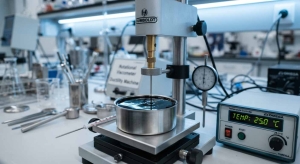
Factors Affecting the Quality of Vacuum Bottom Types
The chemical composition and properties of vacuum bottom are strongly influenced by the type of crude oil used in the refinery. Different crude oils contain varying amounts of heavy hydrocarbons, sulfur, metals, and asphaltenes, which directly impact the quality of the final vacuum bottom. The quality of the crude oil can affect the properties of hydrocracked vacuum bottom and how it is blended with petroleum cuts to produce fuel oil. Selecting the appropriate type of crude oil for the refinery can play a key role in producing vacuum bottom with the desired quality for specific applications. Refineries may blend different crude oils, which can lead to different properties in the hydrocracked vacuum bottom.
The operating conditions of atmospheric and vacuum distillation units (such as temperature, pressure, and residence time) play a significant role in the quality and yield of vacuum bottom production. Vacuum distillation is performed to prevent thermal decomposition of the feed components. Advanced distillation processes can help in better separation of different components of crude oil and consequently produce vacuum bottom of superior quality. The use of efficient vacuum systems in distillation units can help increase product recovery and prevent undesirable secondary reactions. Optimizing refining and distillation processes to achieve the desired quality of vacuum bottom is of great importance. This includes precise control of temperature and pressure in distillation towers and the use of appropriate technologies.
The presence of impurities such as sulfur, heavy metals, and asphaltenes in vacuum bottom can negatively impact its quality and applications. High sulfur content can lead to environmental problems and corrosion of equipment. Asphaltenes are complex, high molecular weight compounds that increase the viscosity of vacuum bottom and make their management difficult in refining processes and the use of vacuum bottom. High concentrations of vacuum tower bottoms in FCC feed can lead to increased levels of asphaltenes and heteroatoms in slurry oil. Removing or reducing these impurities through appropriate refining processes is essential to improve the quality and expand the applications of vacuum bottom. Improved quality of vacuum bottom can be achieved by reducing viscosity, reducing density (increasing API gravity), reducing asphaltene content, reducing carbon residue, reducing sulfur content, and reducing sediment.
The Role of Vacuum Bottom in the Trade of Petroleum Products
Vacuum bottom, as an intermediate commodity in the oil industry, is traded internationally, especially as a base for the production of bitumen and base oils. Some reports mention the trade of petroleum residues and bitumen, of which vacuum bottom is a fundamental component. The trade of vacuum bottom is of great importance in the fabric of global petroleum product trade due to its key role as a raw material in the production of high-consumption end products.
Major oil refining giants around the world are among the main suppliers of vacuum bottom. In Iran, state-owned companies such as the Isfahan, Tehran, Shiraz, and Arak refineries are major producers of vacuum bottom. Petroleum product trading companies play an intermediary role in the process of buying, selling, and transporting vacuum bottom internationally. Companies such as Universal Trades are active in the bitumen trade, the essence of which is derived from vacuum bottom. Universal Trades has become one of the reputable bitumen trading companies. Some reports also refer to companies active in the vacuum bottom market in specific regions, such as Iraq. Companies like Wataniya Group and Majd al-Iraq are active in the Iraqi vacuum bottom market. A complex network of producers (refineries), suppliers, and trading companies are active in the global vacuum bottom trade.
The price of vacuum bottom is usually determined based on the price of heavy fuel oil and is influenced by factors such as global crude oil prices, product quality, and supply and demand. The pricing formula for vacuum bottom is generally 5 to 10 percent lower than the price of bitumen. Since vacuum bottom is the main raw material in the production of bitumen and base oils, changes in its price can directly affect the price of these end products. An increase in the price of raw materials, such as vacuum bottom, can lead to an increase in the final price of bitumen. Fluctuations in global crude oil prices and changes in the supply and demand of vacuum bottom can contribute to instability in the bitumen and base oil markets. Traders and trading companies must carefully monitor these factors to make informed decisions.
Between Vacuum Bottom and Other Key Petroleum Products
In the crude oil refining process, lighter components, such as petroleum gases, gasoline, and naphtha, are initially separated from each other in the atmospheric distillation tower. Then, at higher temperatures, kerosene and diesel are separated. The residue of this tower, which is heavier, goes to the Vacuum Distillation Unit (VDU). In this unit, heavier components, such as heavy oils and vacuum bottom, are separated. Mazut, also known as fuel oil, can be obtained from the residue of atmospheric distillation or from further processing of vacuum bottom. In fact, vacuum bottom constitutes more than 70 percent of the raw materials for fuel oil. Vacuum bottom is the heaviest component of crude oil and is obtained after the separation of lighter ends and middle distillates, such as gasoline, kerosene, and diesel. This separation process is based on the difference in the boiling points of the various components of crude oil.
Although vacuum bottom is not directly used in the production of gasoline, kerosene, and diesel, it can be used as feedstock for upgrading units, such as hydrocracking and coking, which can ultimately lead to the production of these lighter products. The delayed coking unit uses vacuum bottom to produce more valuable products such as gasoline, gasoil, and petroleum coke. Mazut (heavy fuel oil) can be obtained directly from vacuum bottom or from its processing. Vacuum bottom is known as a source for the production of heavy fuel oil used in industries, power generation, and marine engines. As a key component in the oil refining value chain, vacuum bottom indirectly plays a role in the supply of various petroleum products. Conversion processes, such as hydrocracking and coking, enable the conversion of heavy components of crude oil into lighter and more valuable products.

The Process of Producing Bitumen from Vacuum Bottom and Affecting Factors
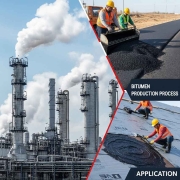
The production of bitumen from vacuum bottom is usually carried out through the air blowing process. In this process, vacuum bottom in the bitumen production unit (bitumen production tower) is exposed to a gentle flow of air at a temperature of 240 to 320 degrees Celsius. The passage of air at this temperature causes oxidation and polymerization of the molecules present in the vacuum bottom. Specifically, maltene molecules are converted to heavier asphaltene molecules, which leads to an increase in the viscosity and softening point of the bitumen and a decrease in its penetration grade. The air blowing process can be carried out batch-wise or continuously, and its duration, depending on the desired bitumen grade, can vary between 3 and 24 hours. The purpose of air blowing is to produce asphaltene molecules that increase the viscosity of the bitumen. In some cases, if the vacuum bottom has the desired properties for bitumen, it may be used directly without the need for the air blowing process. Other methods such as blending different bitumens together and solvent deasphalting with propane or butane are also used to produce bitumen from vacuum bottom.
Bitumen suppliers are usually refineries that have bitumen production units from vacuum bottom. Also, petroleum product trading companies play a role in the supply and distribution of bitumen. Some companies, such as Feedar Esfahan Manufacturing Co. in Iran, have plans to develop a vacuum bottom processing unit for bitumen production. The export of base oils, which can be produced from vacuum bottom, is an important market in the oil industry, and countries such as the United States, South Korea, and Russia are major exporters. The United States reduced its base oil exports by about 6 percent in 2022, but exports to countries such as Colombia and Chile increased. There is a direct link between vacuum bottom suppliers (who are often also bitumen suppliers) and the base oil export market, as both products are derived from crude oil processing. Decisions regarding the allocation of vacuum bottom between bitumen and base oil production can be influenced by demand and prices in both markets.
Specialized Articles on Vacuum Bottom
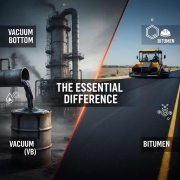
Key differences and industrial applications of vacuum bottom and bitumen.
Conclusion and Outlook of the Vacuum Bottom Market
Vacuum bottom is a vital and heavy component in the oil refining industry, used as the main raw material for the production of bitumen and base oils, as well as feedstock for upgrading units. The quality of vacuum bottom is influenced by the type of crude oil and refining processes, and the amount of impurities plays an important role in determining its final application. The global trade of vacuum bottom is of significant importance due to its role in the production of widely used products, and refining and trading companies play a key role in this. The process of producing bitumen from vacuum bottom, especially the air blowing process, plays an important role in determining the properties and applications of the final bitumen.
Given the growing demand for bitumen in developing countries due to infrastructure development, as well as the constant demand for base oils, the vacuum bottom market is expected to remain dynamic. The Middle East and North Africa vacuum residue market is projected to grow at an annual growth rate of 4.4 percent between 2024 and 2032. Technological advancements in refining and upgrading processes can lead to more efficient use of vacuum bottom and the production of higher value-added products. Changes in environmental regulations may affect the production and use of vacuum bottom and increase the need for new technologies to reduce pollutants. The vacuum bottom market, as a fundamental component of the oil industry, is dependent on the developments in the oil industry and global demand, and long-term demand is expected to increase with economic growth and infrastructure development. However, fluctuations in crude oil prices and changes in production policies can affect this market.






What factors influence the quality of Vacuum Bottom, and how do impurities like sulfur and asphaltenes affect its quality?
The quality of Vacuum Bottom is significantly influenced by several factors involved in various production and refining stages:
Crude Oil Source and Composition: This is the most crucial determining factor. Different crude oils contain varying amounts of heavy hydrocarbons, sulfur, metals, and asphaltenes, which directly impact the quality of the final Vacuum Bottom. Selecting the appropriate crude oil plays a key role in producing Vacuum Bottom with desired quality for specific applications.
Refining Operating Conditions: The operating conditions of atmospheric and vacuum distillation units (such as temperature, pressure, and residence time) have a substantial impact on the quality and yield of Vacuum Bottom. Optimizing these processes, especially vacuum distillation which is performed to prevent thermal decomposition of feedstock components, is vital for achieving desired quality.
Presence of Impurities: Impurities like sulfur, heavy metals, and asphaltenes can significantly and negatively affect the quality and applications of Vacuum Bottom:
High Sulfur Content: Can lead to environmental problems and equipment corrosion.
Asphaltenes: These complex, high-molecular-weight compounds cause an increase in Vacuum Bottom’s viscosity, making their management difficult in refining processes and when using Vacuum Bottom. High concentrations of asphaltenes in refinery feedstocks can lead to operational issues. Removing or reducing these impurities through appropriate refining processes is essential for improving Vacuum Bottom’s quality and expanding its applications.
Why are Asphaltenes the most challenging impurities in Vacuum Bottom and how do they affect its quality?
Asphaltenes are complex compounds that cause an increase in VTB viscosity. Their high concentration makes subsequent refining and upgrading processes difficult to manage and impacts the final quality of products like bitumen.
Why is it necessary to use a vacuum distillation tower to separate vacuum bottom, rather than doing it at atmospheric pressure?
Because vacuum bottom contains very heavy molecules that burn at extremely high temperatures. Using a vacuum reduces the pressure, allowing these materials to separate at lower temperatures, which prevents thermal cracking and a decline in product quality.
Because vacuum bottom contains very heavy molecules that burn at extremely high temperatures. Using a vacuum reduces the pressure, allowing these materials to separate at lower temperatures, which prevents thermal cracking and a decline in product quality..